



Explosive allegations have emerged suggesting that a পরিকল্পিত conspiracy to overthrow the government of Sheikh Hasina was already underway in Dhaka’s elite residential areas—Mirpur and Mohakhali DOHS—prior to August 5, 2024.
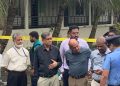
On that morning, at least three groups of retired military officers, reportedly aligned with opposition রাজনৈতিক forces, gathered at the Defense Officers Housing Society (DOHS) in Mirpur and Mohakhali.
The groups then split and marched toward key نقاط in the capital—one toward ECB Square, another toward Jahangir Gate, and a third crossing Mohakhali Rail Gate toward Banani DOHS, where another group was waiting.
Each procession consisted of around 40–50 individuals, chanting slogans such as:
“We want a military government now.”
Among those heading toward Jahangir Gate was retired Brigadier General Sakhawat Hossain. During the march, he reportedly received a ফোন call from Brigadier General Ahmed Tanvir Mazhar Siddiqui, then head of counter-intelligence at the Directorate General of Forces Intelligence (DGFI).
He warned:
“Sir, you have entered a sniper zone. Please do not proceed further.”
In a television interview on April 6, adviser Asif Nazrul stated that he had been warned by a military officer eight days before August 5 that snipers had already been positioned across various parts of Dhaka.
According to intelligence sources, evidence of these communications was available with officials linked to the National Telecommunication Monitoring Center (NTMC).
During the quota reform আন্দোলন, law enforcement agencies reportedly used rubber bullets and pellet shots. However, they did not possess sniper weapons or 7.62 mm caliber ammunition.
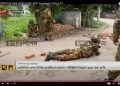
Yet between July 16 and August 8, 2024, more than a hundred people were killed by long-range gunfire from unidentified attackers.
Most victims were shot from behind, suffering severe head injuries and dying from excessive bleeding—indicating possible targeted killings.
Analysts believe that indiscriminate firing combined with targeted হত্যাকাণ্ড was used to create আতঙ্ক among the public and incite anger against the government and law enforcement.
Without thorough investigations, responsibility for these deaths was quickly attributed to police and the government of Sheikh Hasina, contributing to the formation of a specific narrative.
However, one of the most overlooked aspects after August 5 was the alleged involvement of a significant number of military officers—reportedly in the শতাধিক range.
Reliable sources suggest that such actions could amount to acts of treason, as they may have involved organized operations against the state.
Despite this, neither the interim government led by Muhammad Yunus nor the relevant intelligence agencies have taken visible steps to identify those responsible for the attacks.
Furthermore, the 46th Infantry Brigade and the 9th Infantry Division were reportedly not allowed to take control of Dhaka during the crisis.
The artillery division, tasked with maintaining government and public security, also failed to perform its duties—raising further সন্দেহ.
Analysts argue that this apparent inaction may have been deliberate, possibly aimed at shielding the real conspirators, particularly individuals within uniformed institutions.
The ঘটনাপ্রবাহ has raised profound questions at the national level regarding state security, institutional accountability, and the সত্য behind the violence.
(To be continued)