



Amid growing fears of Taliban-style governance in Bangladesh, Taslima Nasrin on Hijab Order has ignited a nationwide storm. The exiled feminist author blasted Bangladesh Bank’s controversial dress code circular, accusing authorities of policing women’s bodies under a rising wave of fundamentalism.
The circular, issued on 21 July by the Bank’s HR department, mandated women employees to wear “professional modest attire”—specifically salwar-kameez with orna (scarf)—and banned short sleeves, short-length dresses, and leggings. It also encouraged the use of simple hijabs. For male employees, long or short-sleeved formal shirts and pants were prescribed.



. শুধু সালোয়ার কামিজ পরলে চলবে না, ওড়না পরতে হবে। কেন ওড়না পরতে হবে? স্তন আছে বলে? স্তন কি প্রয়োজনীয় অঙ্গ নয় নারীর…
Posted by Taslima Nasrin on Wednesday, July 23, 2025
But the Taliban-style directive faced immediate backlash. Social media erupted in protest. Feminists, activists, and public intellectuals condemned the dress code as a symptom of growing religious authoritarianism under Muhammad Yunus’s unelected rule.
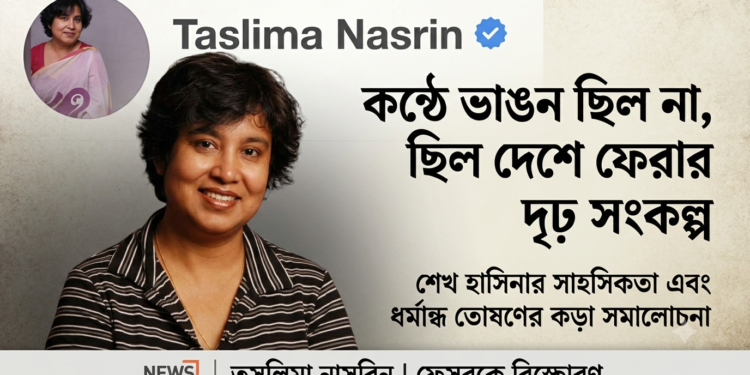
Taslima Nasrin on Hijab Order became the focal point of protest when she wrote on Facebook:
“It’s not enough to wear salwar kameez—you must wear a scarf too. But why? Because you have breasts? Are breasts not necessary organs of a woman’s body? Why must they be hidden under layers of cloth? Are they shameful? Only those who consider a woman’s entire body shameful think breasts are too. They don’t just impose scarves—they enforce hijabs and burqas too. But never on men, because men’s bodies are not considered shameful.”
Her post went viral, prompting further outcry from women’s rights groups across the country and diaspora.
By Thursday afternoon (24 July), under pressure from both within and outside the institution, Bangladesh Bank withdrew the directive. In a new statement, the bank said:


“The circular was never a finalized policy. Upon review, and following the Governor’s dissatisfaction, the notice has been withdrawn.”
Notably, Governor Abdur Rouf Talukder, currently abroad, was reportedly angered by the viral controversy. His directive led to the cancellation.


Still, many observers argue that the very issuance of such a notice reflects Bangladesh’s ongoing descent into a theocratic state under Muhammad Yunus and Jamaat-e-Islami influence. According to critics, today’s withdrawal may be tactical, but the ideological retreat is already in motion.
Taslima Nasrin on Hijab Order has thus become symbolic—not just of resistance to a dress code, but of a larger fight for secularism and women’s autonomy in a country at a dangerous crossroads.