


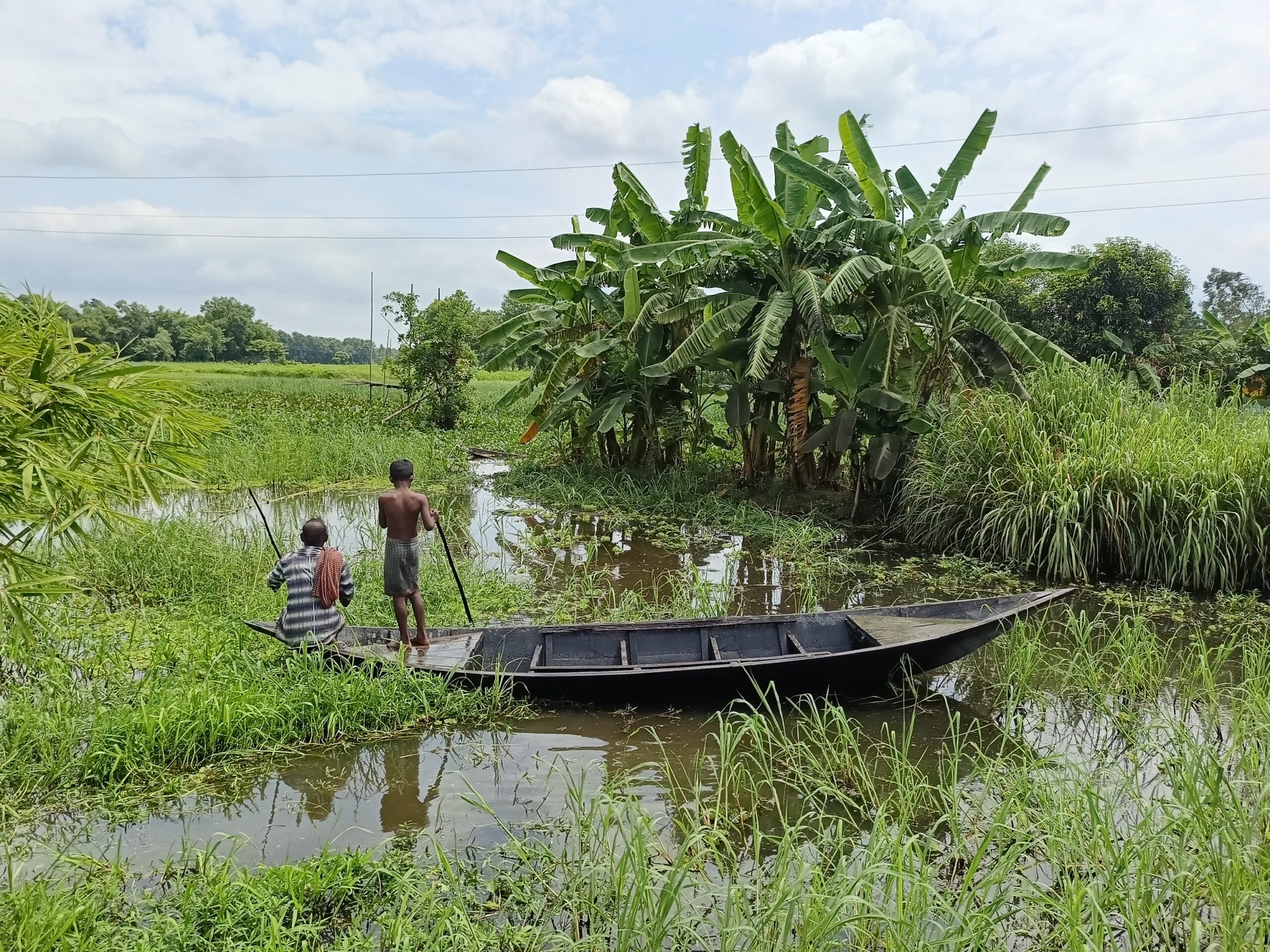
The canal that once echoed with the roar of flowing water and the laughter of villagers has now fallen silent. In Kaziatal village under Darora Union of Muradnagar Upazila in Cumilla, a once-vibrant canal has turned into a dying waterway, taking with it a rich tradition of rural fishing and community life.
Surrounded by the natural beauty of the countryside, the canal on the eastern side of the village was once the lifeline of the local people. Throughout most of the year, it remained full of water, while the monsoon transformed it into a powerful stream. The canal was not only a source of fish but also a vital part of the area’s culture, livelihood, and social harmony.



Elderly residents recall a time when fishing was much more than a means of earning a living—it was a village-wide celebration. During the rainy season, people of all ages would gather with traditional fishing gear, including Khora Jal (drag net), Ber Jal (encircling net), Khati and Polo (a traditional bamboo fish trap). Families and neighbours spent hours catching fish together, turning the canal into a place of joy, unity and shared memories.
However, the passage of time, climate change, siltation, encroachment and years of neglect have drastically altered the canal. Water levels have declined, fish habitats have disappeared, and the once-thriving ecosystem has nearly vanished. Along with it, a unique rural tradition is slowly fading away.



Veteran fisherman Shambhu Nath Chandra Das expressed his disappointment, saying, “There used to be plenty of water and fish in this canal. Today, there is hardly any water, and fishing no longer brings the joy it once did. The gatherings and excitement of the past have disappeared.”
Local residents Hosneyara Begum, Jahanara Begum and Monowara Begum shared similar memories.

“This canal is deeply connected to our childhood. We used to catch fish together and spend wonderful times here. Today, the canal is almost dry. Grass has replaced the water, and we now collect that grass for our cattle. We also gather local leafy vegetables and wild plants from its banks. But the lively canal we once knew is gone,” they said.
Residents believe that immediate action is needed to restore the canal through dredging, removal of illegal encroachments, and proper conservation measures. They warn that without timely intervention, future generations will know this canal only through stories told by their elders.
Environmental observers note that the loss of a canal is not merely the disappearance of a waterbody; it also means the loss of biodiversity, fisheries, agricultural support, local heritage and an important chapter of rural culture.
Today, the dying canal of Kaziatol stands as a silent reminder that when nature is neglected, communities lose not only their environment but also their identity, history and traditions.