


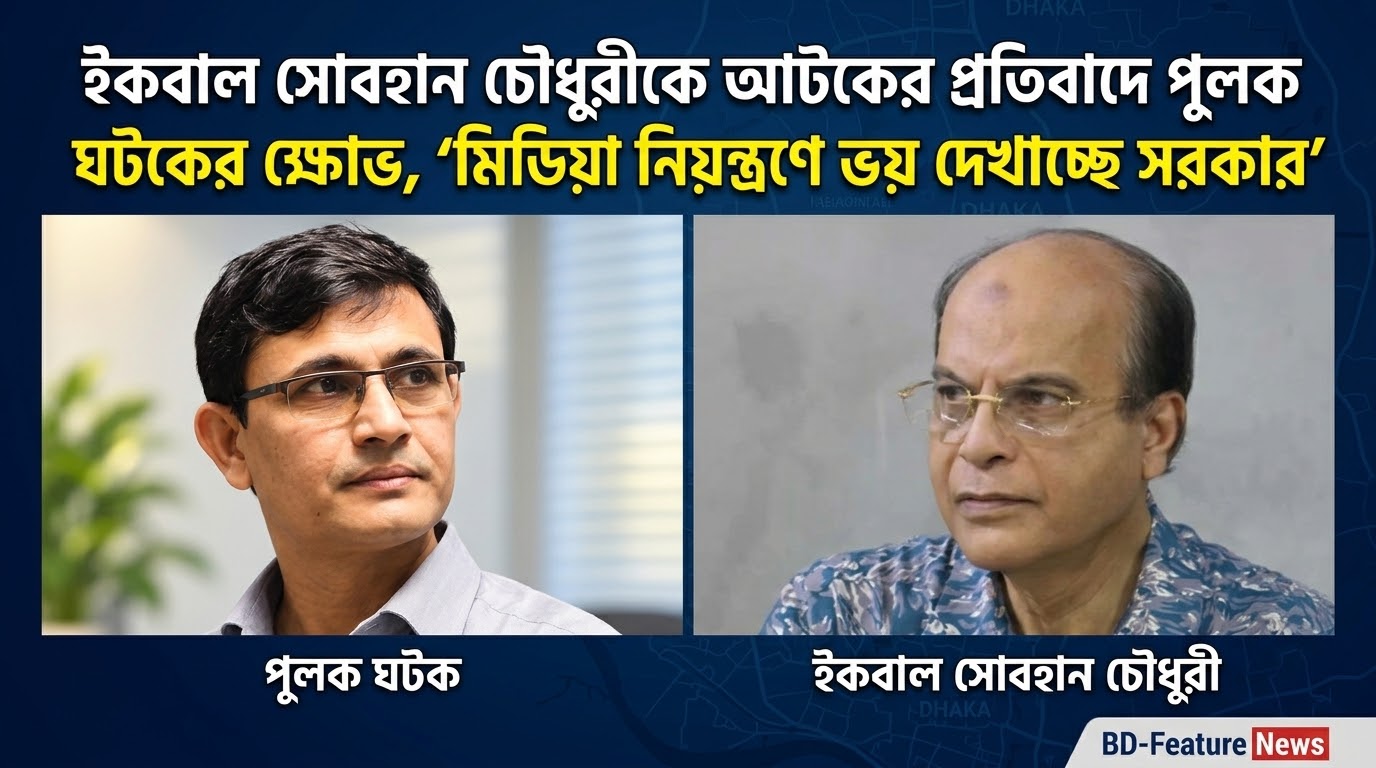
The detention of veteran Bangladeshi journalist Iqbal Sobhan Chowdhury, former President of the Bangladesh Federal Union of Journalists (BFUJ), editor of The Daily Observer, and former Press Adviser to former Prime Minister Sheikh Hasina, has triggered condemnation and concern among journalists and press freedom advocates.
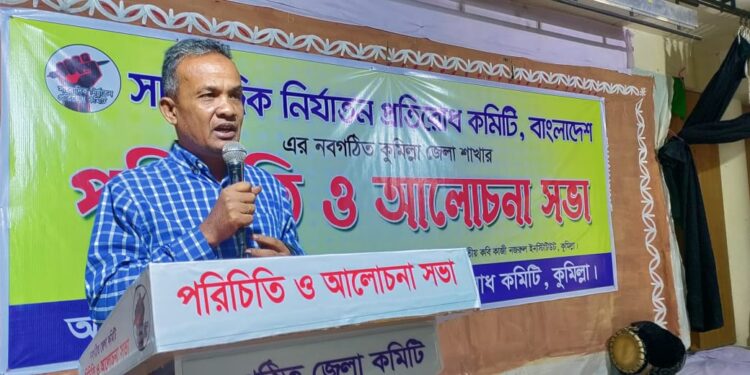
The Anti-Repression Journalists Front has strongly condemned his detention and demanded his immediate release, expressing concern over what it described as an alarming attack on press freedom and fundamental human rights.


In a statement issued on Wednesday, November 4, the organisation’s Convener, Akhtar Hossain, and Member Secretary, Sheikh Jamal, said that detaining a senior journalist from his own workplace without specific allegations was deeply disturbing and unprecedented.
They described the incident as a serious blow to media freedom and a violation of fundamental and human rights. They also stressed that ensuring the safety, security and independence of journalists is a fundamental responsibility of the state.
The organisation called for Chowdhury’s immediate release and urged the authorities to respect journalists’ constitutional rights and freedom of expression.
According to reports, Chowdhury was taken from the DBC News office in Mohakhali, Dhaka, on Wednesday and brought to the Detective Branch (DB) police headquarters on Minto Road.
Pulak Ghatak: Detention Is an Attempt to Intimidate the Media
Reacting to the incident, Pulak Ghatak, former Joint Secretary General of the Bangladesh Federal Union of Journalists (BFUJ), issued a strong condemnation, accusing the government of using intimidation to tighten control over the media.
Ghatak said that a police raid on a media organisation’s premises and the detention of an editor represented a direct confrontation with democracy and the principles of a civilised society.
He alleged that the government was increasingly concerned about its political legitimacy following what he described as a one-sided election held without the participation of the Awami League, in which the BNP and Jamaat-e-Islami shared political power through electoral arrangements.
Referring to the possibility of Sheikh Hasina’s return to Bangladesh in December, Ghatak claimed that the government led by Tarique Rahman was becoming increasingly nervous.
He argued that controlling the media had consequently become a major priority for the government.
According to Ghatak, the detention of Iqbal Sobhan Chowdhury—a senior journalist, former BFUJ president and editor of The Daily Observer—was intended to send a warning to the wider journalistic community and create an atmosphere of fear among media professionals.
Concerns Over Police Violence and Suppression of Dissent
Ghatak also expressed concern over what he described as threatening remarks by an adviser named Zahid, reportedly suggesting that police could exercise the right to kill under certain circumstances within the framework of law if the situation warranted it.
He said such remarks could create fear among ordinary citizens and undermine confidence in law enforcement institutions.
Referring to incidents involving garment workers, Ghatak alleged that violence and intimidation were being used to suppress dissent and discourage people from raising their voices.


He further accused the government of relying on fear, violence, repression and arbitrary detention to maintain its hold on power.
“An unethical and weak government seeks to remain in power by intimidating people,” Ghatak said, while condemning what he described as killings, torture and repressive detentions.
He demanded the immediate release of Iqbal Sobhan Chowdhury and called for an end to the intimidation and harassment of journalists.
A Press Freedom Concern Requiring International Attention
The detention of a senior journalist from a media organisation’s premises raises serious questions about journalists’ safety, media independence, due process and the protection of freedom of expression in Bangladesh.
The incident warrants close attention from international press freedom and journalists’ rights organisations, including the International Federation of Journalists (IFJ), Reporters Without Borders (RSF), the Committee to Protect Journalists (CPJ), ARTICLE 19 and other relevant international bodies.

Journalists must be able to perform their professional duties without fear of arbitrary detention, intimidation or political retaliation. Any allegations against a journalist must be addressed through transparent legal procedures, with full respect for due process and fundamental rights.
The immediate release of Iqbal Sobhan Chowdhury and the protection of press freedom in Bangladesh are matters of urgent concern.
Note: The political allegations and assessments attributed to Pulak Ghatak in this report represent his stated views and have not been independently established as facts.