


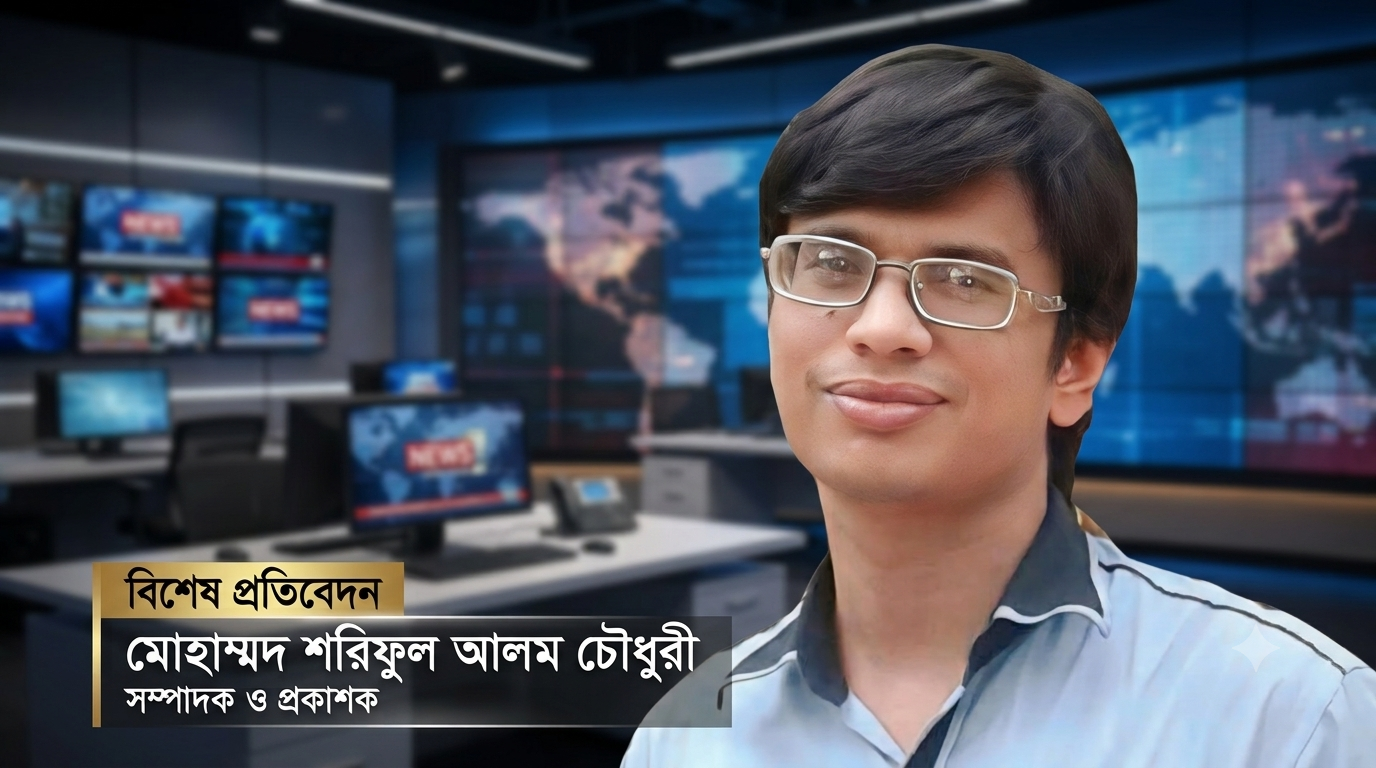
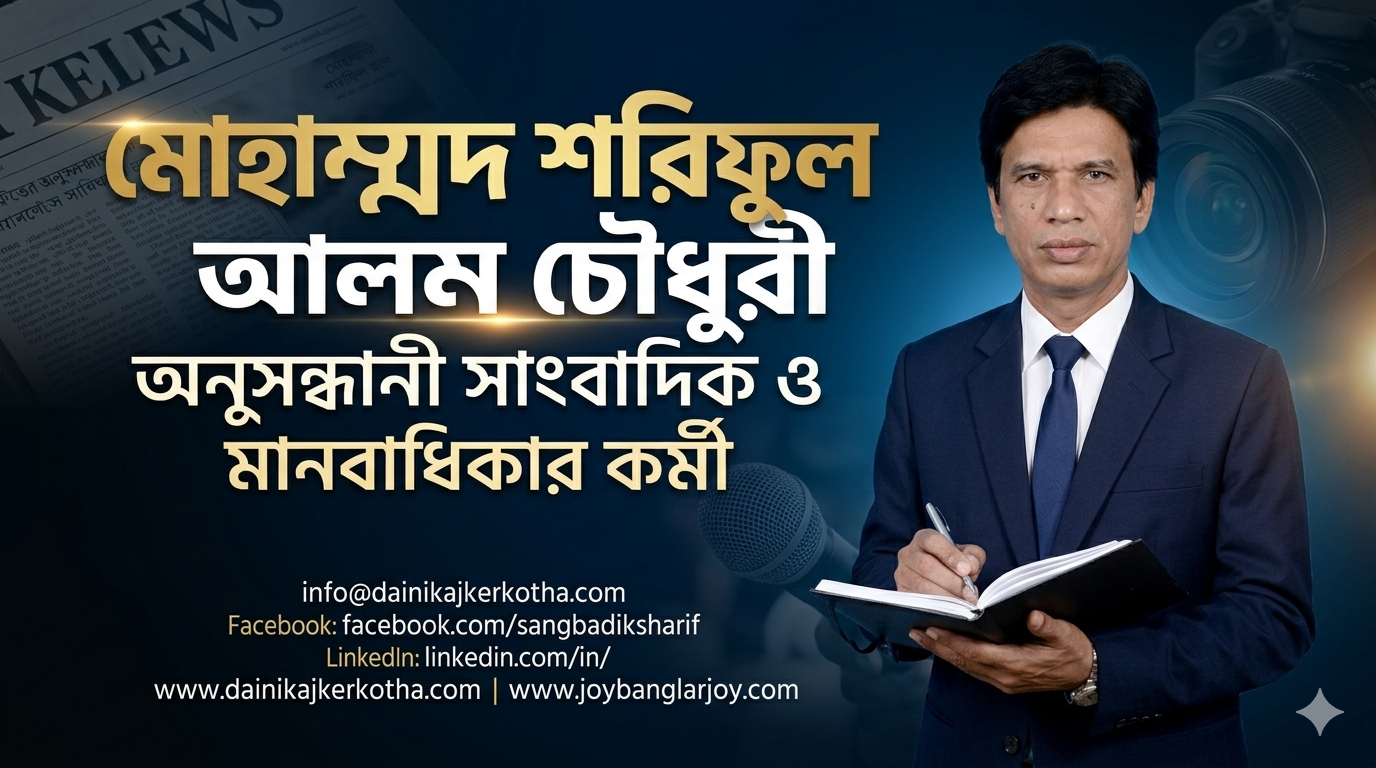
In the complex and often perilous landscape of Bangladeshi journalism, pursuing the truth outside the capital city requires a rare blend of courage, conviction, and resilience. For over two and a half decades, Mohammad Shariful Alam Chowdhury—a veteran investigative journalist, editor, and media entrepreneur based in Muradnagar, Cumilla—has personified this struggle. Serving as a vital bridge between marginalized rural communities and national policymakers, Chowdhury’s career is a testament to the power of the pen against local corruption, administrative malpractice, and political intimidation.
News Highlights
- 26-Year Media Legacy: Active in investigative journalism since 1999, capturing grassroots realities from Muradnagar, Cumilla for top national dailies.
- Editorial Leadership: Founder and Chief Editor of prominent regional online news portals Dainik Ajker Kotha and Dainik Joy Banglar Joy.
- Surviving Retaliation: Brutally targeted and left with life-threatening injuries in July 2020 by local miscreants following his exposure of public fund misappropriation.
- Global Recognition: His stand for truth drew direct condemnation from international press freedom bodies like Reporters Without Borders (RSF) and the IFJ.
- Press Advocate: Former General Secretary of the Muradnagar Press Club, actively training and shielding the next generation of rural journalists.
A Quarter-Century of Editorial Leadership and Media Innovation
Chowdhury’s journey in journalism began in 1999, an era when regional reporting heavily relied on traditional print infrastructure. Over the last 26 years, he has systematically transitioned from a dedicated field correspondent into a pioneering digital media entrepreneur.
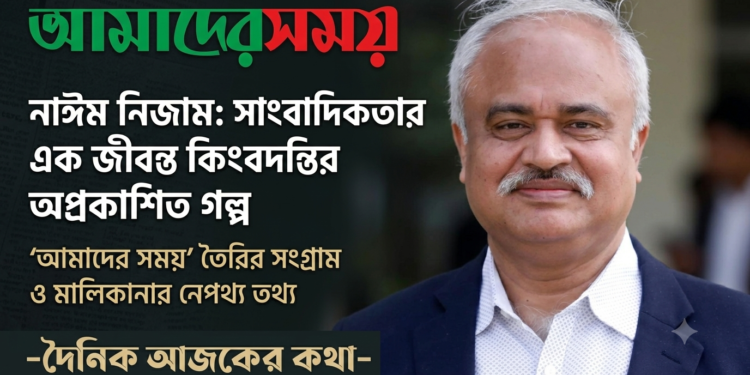
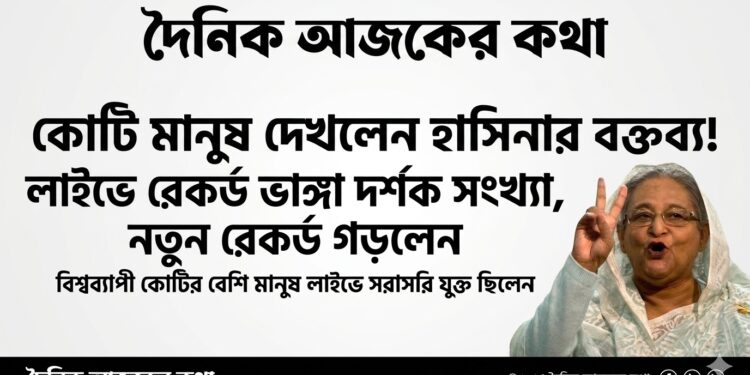
Today, Chowdhury serves as the Founder and Chief Editor of Dainik Ajker Kotha and Dainik Joy Banglar Joy, two influential online Bengali news portals that have democratized information access across the Chittagong Division. Concurrently, he maintains his deep roots in print media as the Cumilla District Correspondent for prominent national dailies, including Daily Ajkaler Khabor and Dainik Destiny.
Before establishing his independent editorial platforms, Chowdhury spent decades reporting from the frontlines for Bangladesh’s most respected national broadsheets. His sharp, data-driven, and highly detailed dispatches have graced the pages of:
- Dainik Sangbad (One of the nation’s oldest progressive dailies)
- Dainik Janakantha (Renowned for its extensive nationwide network)
- Dainik Vorer Kagoj (A pioneer in investigative political reporting)
- Dainik Samakal (A leading contemporary mainstream voice)
- Dainik Business Bangladesh (Focusing on rural economy and financial transparency)
Through this expansive network, Chowdhury ensured that issues affecting the people of Muradnagar—ranging from agricultural crises to infrastructure delays—were never ignored by the national conscience.
The 2020 Assault: Facing Deadly Retaliation for Exposing Corruption
The true measure of an investigative journalist is often found in the risks they endure. In July 2020, Chowdhury’s commitment to accountability brought him face-to-face with the grim realities of rural power dynamics.
Chowdhury had published a series of damning, undercover investigative reports exposing the systematic misappropriation of local government development funds, public relief resources, and administrative irregularities in the Muradnagar region. The reports pointed directly at influential local actors and corrupt officials who viewed his transparency as a direct threat to their illicit networks.
In a brutal bid to silence his voice, a group of armed miscreants acting on behalf of local influential quarters launched a pre-planned, near-fatal physical assault on Chowdhury. He was savagely beaten with iron rods and lethal weapons, leaving him with multiple broken limbs and life-threatening internal injuries. Left for dead, his survival was described by medical professionals as nothing short of a miracle.
International Outcry and Global Press Freedom Recognition
While the attackers intended to bury Chowdhury’s reporting, the brutality of the incident had the opposite effect. It amplified his work onto the international stage, turning a regional assault into a global symbol of the dangers faced by frontline journalists in South Asia.
Prominent international press freedom watchdogs and human rights organizations immediately intervened:
- Reporters Without Borders (RSF): The Paris-based global press defender issued a strong public condemnation, demanding an immediate independent investigation into the attack and calling out the culture of impunity protecting regional perpetrators in Bangladesh.
- International Federation of Journalists (IFJ): Representing over 600,000 media workers globally, the IFJ documented the case, placing Chowdhury’s struggle at the center of their advocacy for safety standards for rural journalists.
Despite enduring immense physical pain, psychological trauma, and continuous legal and political pressure, Chowdhury refused to go into exile or abandon his post. Upon his recovery, he returned directly to his editorial desk, continuing his crusade against corruption with even greater fervor.
Institutional Leadership and Mentoring the Next Generation
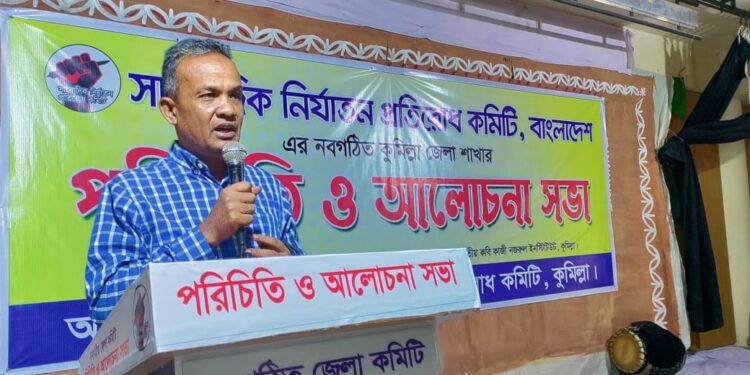
Beyond his personal reporting, Chowdhury has been a foundational pillar of institutional journalism in Cumilla. As the former General Secretary of the Muradnagar Press Club, he worked tirelessly to institutionalize ethical journalism practices and build a protective network for young reporters.
In a media ecosystem where rural journalists are often underpaid, untrained, and vulnerable to legal harassment under draconian digital laws, Chowdhury has utilized his platforms to mentor dozens of young men and women. Through Dainik Ajker Kotha, he has established a rigorous standard of fact-checking and objective reporting, proving that regional digital portals can match the professionalism of metropolitan media houses.
An Indelible Legacy of Courage
As Bangladesh navigates a rapidly shifting socio-political landscape, the role of independent journalists like Mohammad Shariful Alam Chowdhury remains absolutely critical. He stands as a living reminder that democracy cannot function without local accountability, and that the ultimate duty of a journalist is to speak truth to power, regardless of the personal cost.
Chowdhury’s life story is no longer just a biography; it is a vital chapter in the history of Bangladesh’s ongoing struggle for press freedom, civil liberties, and the right to information.


ADVERTISEMENT
ADVERTISEMENT

ADVERTISEMENT