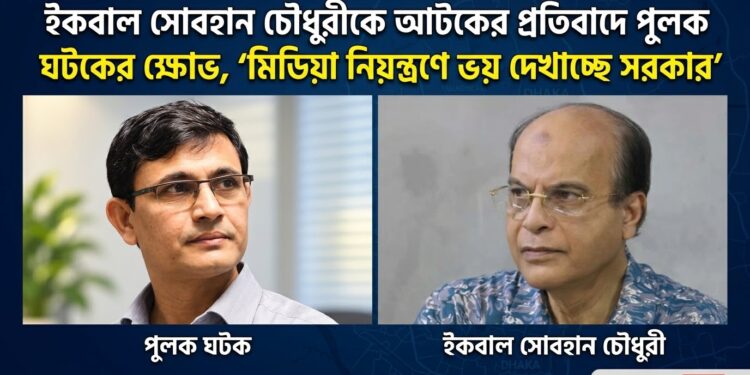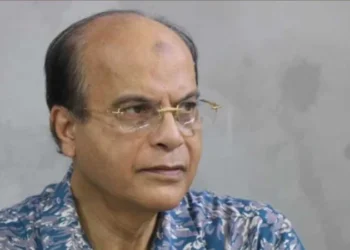



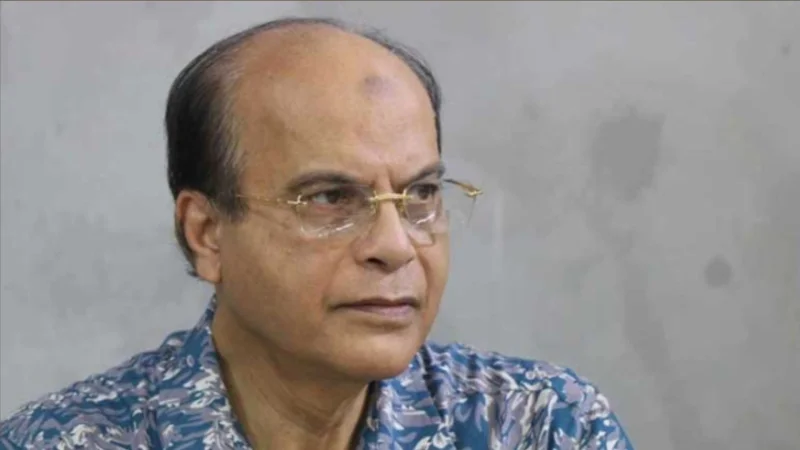
Veteran Bangladeshi journalist Iqbal Sobhan Chowdhury, former President of the Bangladesh Federal Union of Journalists (BFUJ), editor of The Daily Observer, and former Press Adviser to ousted Prime Minister Sheikh Hasina, has been formally arrested in a murder case related to the July 2024 uprising.
The arrest has intensified concerns over the treatment of journalists in Bangladesh, particularly allegations that criminal cases and detention are increasingly being used against media professionals, raising questions about press freedom, freedom of expression and the protection of journalists.
RelatedPost



According to a report published by The Daily Star on November 5, Dhaka Metropolitan Police Detective Branch (DB) Chief Shafiqul Islam confirmed that Iqbal Sobhan Chowdhury had been shown arrested in a murder case filed with Jatrabari Police Station on August 26, 2024, in connection with the July uprising.
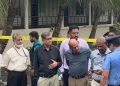
Chowdhury was taken from the DBC News office in Mohakhali, Dhaka, on Wednesday afternoon and subsequently brought to the DB headquarters on Minto Road.
DBC News Journalist Also Detained
Alongside Iqbal Sobhan Chowdhury, DBC News Special Correspondent Rajib Ghosh was also taken into DB custody.
However, DB Chief Shafiqul Islam later said that a decision had been made to release Rajib Ghosh.
Earlier, DMP Deputy Commissioner (Media) Md Akhter Hossain told journalists that the two were taken to the DB office following a situation arising from the publication of a news report. He said investigators were speaking with them.
DBC News Assignment Editor Mukatadir Anik said the channel had initially learned that Chowdhury had been taken for questioning.
Growing Concerns Over Alleged Harassment of Journalists
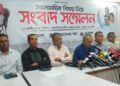
The arrest comes amid broader concerns raised by journalists and press freedom advocates over the alleged use of criminal proceedings, politically sensitive accusations and detention against media professionals in Bangladesh.
Journalists have expressed concern that allegations which they consider fabricated, politically motivated or insufficiently substantiated may be used to intimidate media workers and discourage independent reporting.
Critics argue that criminal cases against journalists, particularly when accompanied by detention and uncertainty over due process, can create a climate of fear across newsrooms and undermine the public’s right to information.
The central concern is not whether anyone should be above the law, but whether journalists are being afforded equal protection, transparent legal procedures and the right to defend themselves against allegations.


A Serious Test for Press Freedom in Bangladesh
The detention of a senior journalist from a media organisation’s premises has renewed calls for transparency, accountability and respect for the independence of the press.
International press freedom organisations, including the International Federation of Journalists (IFJ), Reporters Without Borders (RSF), the Committee to Protect Journalists (CPJ), ARTICLE 19 and Free Press Unlimited, should closely monitor the situation and seek clarification from the relevant authorities.
They should also assess whether journalists in Bangladesh are facing intimidation, arbitrary detention or politically motivated legal action for their professional work.
The authorities must ensure that any criminal allegations are supported by credible evidence, that legal procedures are followed transparently and that no journalist is targeted merely for exercising the right to report, investigate or express an opinion.
Journalism is not a crime. No journalist should face intimidation, arbitrary detention or retaliation for doing their job.
The immediate priority should be to ensure Iqbal Sobhan Chowdhury’s legal rights, access to legal representation, a fair judicial process and transparency regarding the allegations against him.

Bangladesh’s commitment to democracy and the rule of law will also be reflected in how it protects journalists, media institutions and the fundamental right to freedom of expression.
Source: The Daily Star, November 5, 2026. Allegations of politically motivated prosecution and broader harassment of journalists are attributed to concerns raised by journalists and press freedom advocates and require independent verification.