



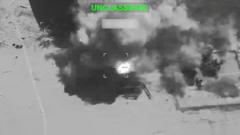
Washington has issued a stern warning to Tehran, with United States President Donald Trump declaring that American military forces are prepared to launch direct retaliatory strikes against key Iranian infrastructure, including power plants and major bridges, if Iranian forces persist in targeting commercial vessels navigating the strategic Strait of Hormuz.
According to official statements, Washington will no longer tolerate hostile actions aimed at international shipping lanes in the Gulf region. The administration emphasized that any aggression or direct missile and drone attacks directed by Iranian units or Islamic Revolutionary Guard Corps naval assets toward maritime transit will trigger an immediate and decisive military response from the United States.

The Strait of Hormuz remains one of the world’s most critical energy chokepoints, through which nearly twenty percent of global petroleum supplies and significant volumes of liquefied natural gas pass daily. Recent maritime security incidents, including harassment of commercial tankers and unmanned aerial vehicle activity, have elevated insurance premiums for international shipping fleets and threatened to destabilize energy markets across Europe, Asia, and North America.
By explicitly identifying vital inland targets—such as domestic power generation grids, transport networks, and strategic logistical bridges—the proposed U.S. response strategy signals a notable escalation designed to significantly increase the domestic economic and operational costs for Iran’s political and military leadership. Defence experts suggest this strategy aims to establish a potent deterrent against asymmetric naval warfare.




Iranian military officials have consistently rejected Western allegations of unlawful maritime interference, asserting that their regional naval presence is intended solely to enforce territorial sovereignty and guarantee maritime security in Gulf waters. Nevertheless, the United States Fifth Fleet, stationed in Bahrain, alongside allied international maritime forces, has heightened monitoring and security presence along commercial corridors to prevent disruptions.
Global energy analysts warn that sustained military confrontation or direct targeting of infrastructure in and around the Persian Gulf could trigger immediate volatility in global commodity markets, driving crude oil prices higher and compounding international inflationary pressures. Diplomatic observers continue to emphasize the necessity of adherence to international maritime law while cautioning against escalatory measures that could ignite a wider regional conflict.